
THREE YEARS INSIDE THE AIR FORCE RESEARCH LAB.
No Second Takes - Editorial Photography Case Study

AT A GLANCE
CLIENT: Air Force Research Laboratory | DIVISION: Distributed Mission Operations Training | ENGAGEMENT: 2007-2010 | CONTRACTED THROUGH: The Boeing Co. & Ball Aerospace Inc., Mesa, Arizona | ROLE: Media Specialist and Outreach Designer
Editorial Photography Case Study
The Situation
The Distributed Mission Operations division was doing work that was difficult to explain and nearly impossible to demonstrate on paper. Live pilots, simulated aircraft, and virtual battlefield environments were being integrated into single coordinated training exercises. Leadership, funding partners, and industry audiences all needed to understand it quickly, and the division had no visual record capable of carrying that message.
The Approach
I embedded with the division for three years as Media Specialist and Outreach Designer. Rather than treating each request as a separate shoot, I built one consistent visual language across every output the division produced: research documentation, conference exhibits, internal communications, and program identity.
Conditions were rarely ideal. Simulator bays were lit almost entirely by monitors and projection systems, which meant slow shutter work paired with rear-curtain flash to hold both the environment and the subject in a single frame. Flight line access was scheduled, restricted, and loud enough to make verbal direction impossible. Nothing could be reshot.
The Outcome
The imagery became the division's standard visual record, adopted across AFRL newsletters, research publications, and conference materials. Partner organizations used it in their own communications. The work supported the division's exhibit at I/ITSEC in Orlando, the world's largest modeling and simulation conference.
DISCIPLINES DELIVERED —
- Editorial photography
- Event photography
- Technical product photography
- Environmental portraiture
- Documentary
- Graphic design
- Visual communications
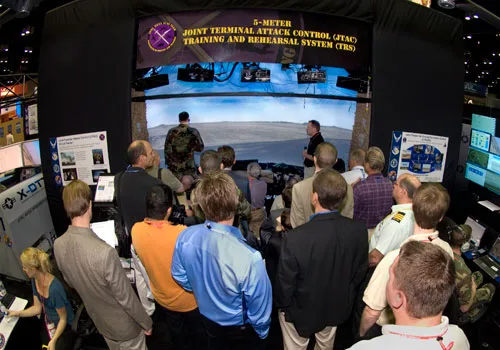
The division's I/ITSEC exhibit drew one of the largest crowds among Department of Defense presentations that year.
My Role As A Media Specialist
Between 2007 and 2010, I worked as a Media Specialist and Outreach Designer supporting the Air Force Research Laboratory (AFRL) in Mesa, Arizona. During this time I served first as a Boeing contractor and later as a Ball Aerospace contractor, providing photography, visual documentation, and graphic design support for research and training initiatives.
My role focused on translating complex technical work into clear visual communication for leadership, research teams, conference audiences, and industry partners.
Prior to joining AFRL, most of my photography experience involved people, performers, and product work. Stepping into an environment centered around military research, simulation systems, and advanced training technology pushed me far outside my comfort zone—and ultimately became one of the most rewarding professional experiences of my career.
The division I supported specialized in Distributed Mission Operations (DMO) training, which focuses on improving communication and coordination between pilots, command centers, and Joint Terminal Attack Controllers (JTACs) operating on the battlefield.
My work included editorial photography, environmental documentation, event coverage, product photography, and graphic design.
Environmental Portraiture & Research Personnel
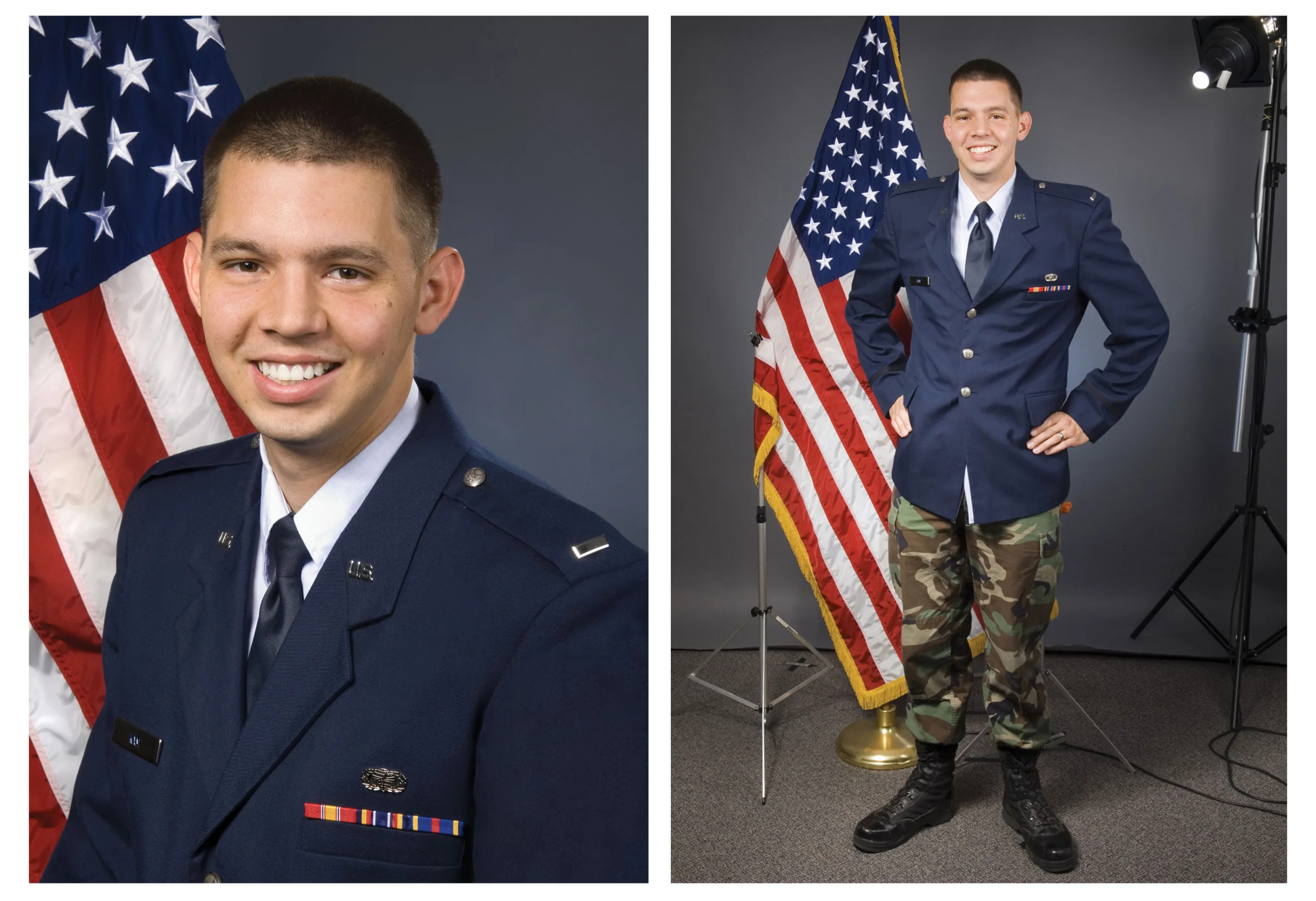
A significant portion of my work involved photographing research staff, engineers, military officers, and contractors working within highly technical training environments.
These portraits were typically created in locations such as:
-
portrait studio
-
flight simulator bays
-
research labs
-
command and control environments
-
simulation training facilities
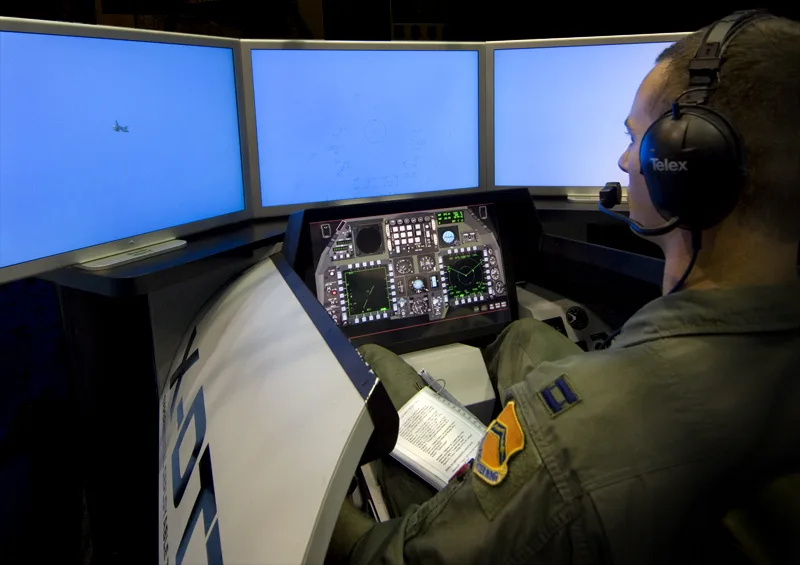
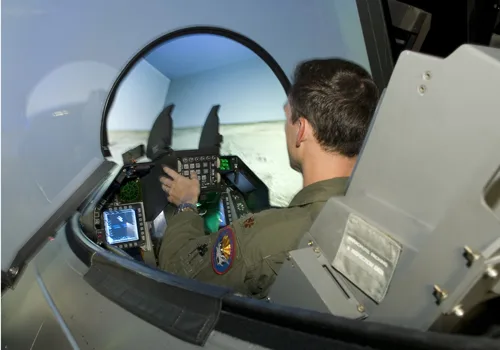
Many of these environments were illuminated primarily by complex digital displays and projection systems. To accurately capture both the subject and the environment, I often used slow shutter techniques combined with rear-curtain flash, allowing the camera to capture the glow of monitors while the flash illuminated the subject.
Due to federal property restrictions, some images from these projects cannot be displayed here. However, these photographs were widely used within AFRL internal communications, publications, and outreach materials.
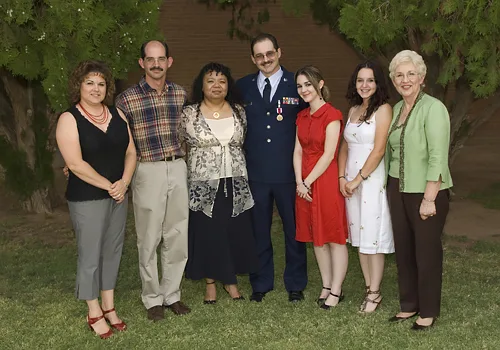
Editorial Photography
Flight Operations & Night Vision Research
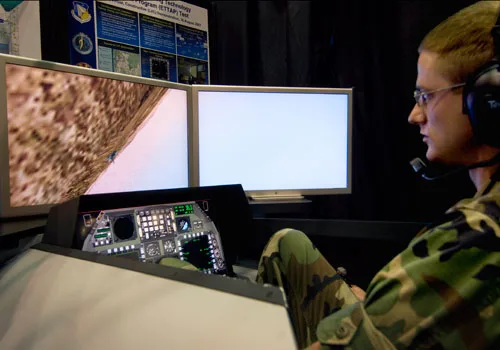
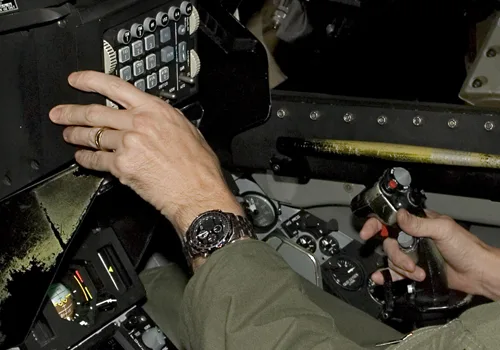
One of the projects I documented involved research supporting Live, Virtual, and Constructive (LVC) training systems, which integrate real pilots, simulated aircraft, and virtual battlefield environments into coordinated training exercises.
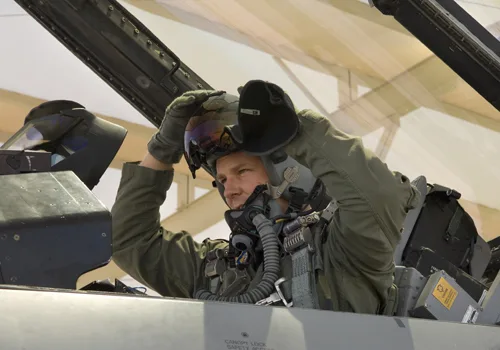
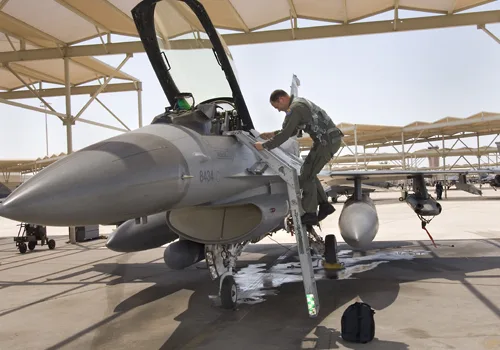
As part of this project, I was tasked with photographing an active-duty pilot wearing night vision goggles while preparing for flight in an F-16 at Luke Air Force Base in Phoenix.
I remember arriving on the tarmac with retired Colonel Carr, who I worked closely with at the lab. Pilots were preparing their aircraft while jet engines roared around us.
Even with earplugs and heavy hearing protection, the sound was overwhelming.
Colonel Carr was speaking and pointing toward the aircraft, but I couldn’t hear a word he was saying. I simply watched him smile and gesture toward the jet.
That was my cue.
The pilot climbed into the cockpit and began running through pre-flight checks while attaching the night vision system. I photographed quickly from multiple angles, capturing the sequence as the aircraft prepared for departure.
Moments like this require speed, awareness, and a documentary mindset; there are no second takes on the flight line.
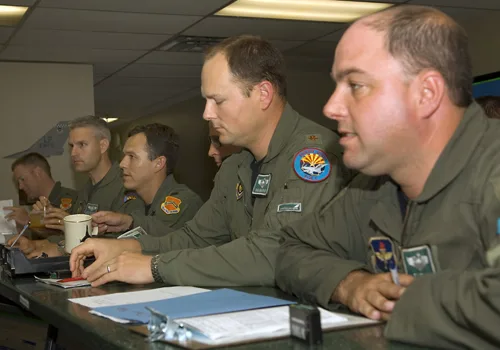
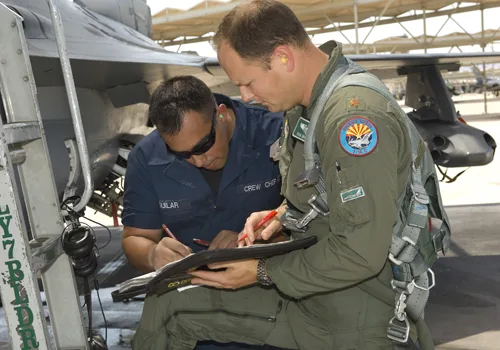
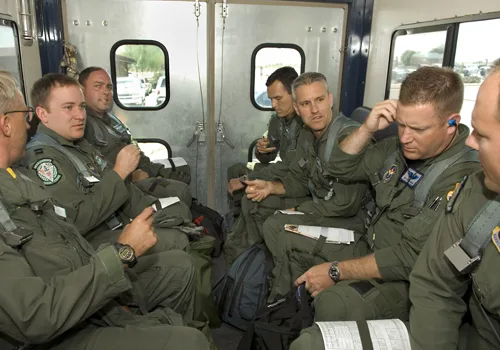
Immersive Training Systems
JTAC Dome Simulator
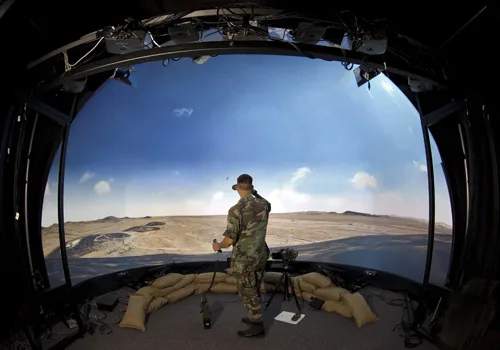
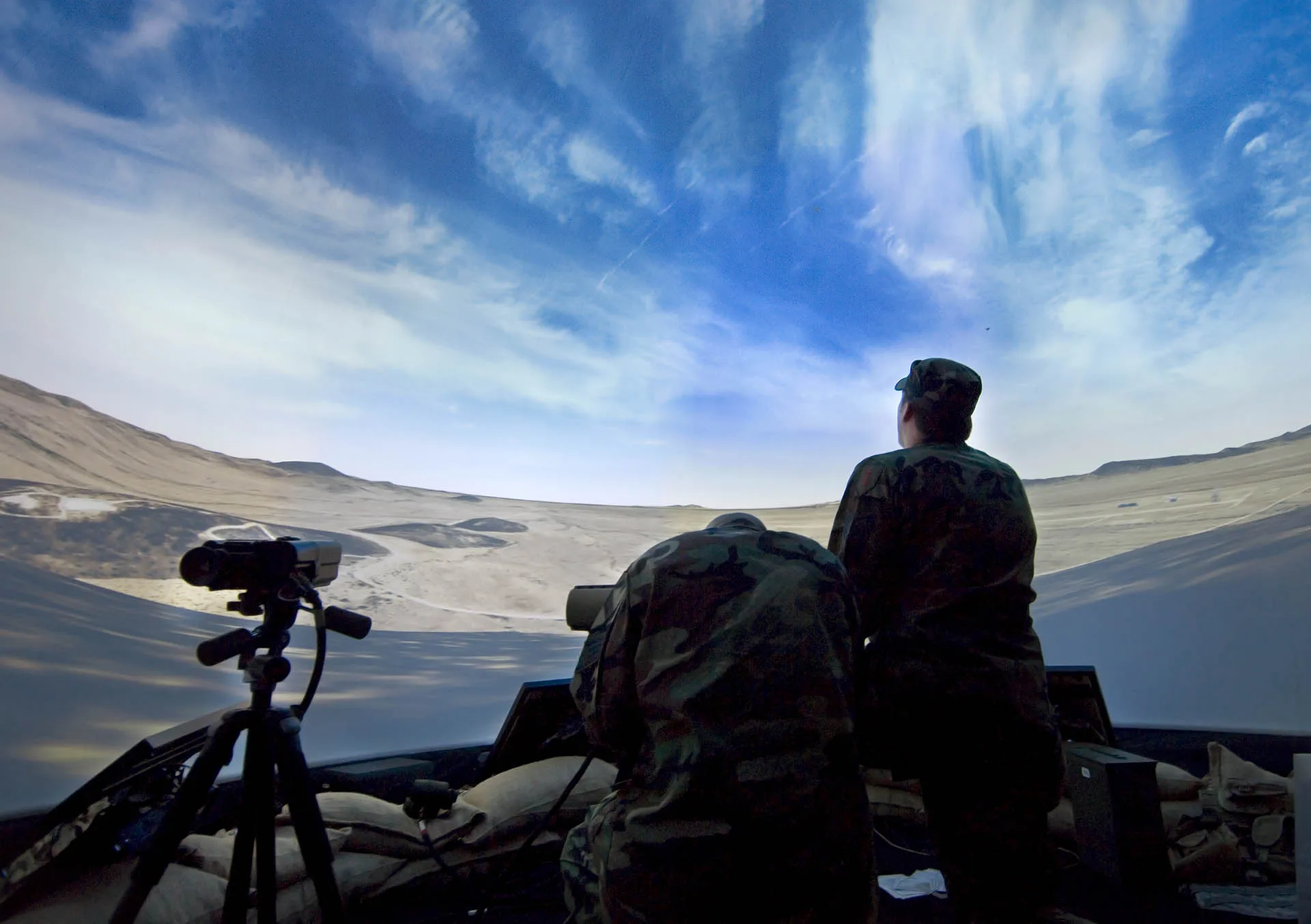
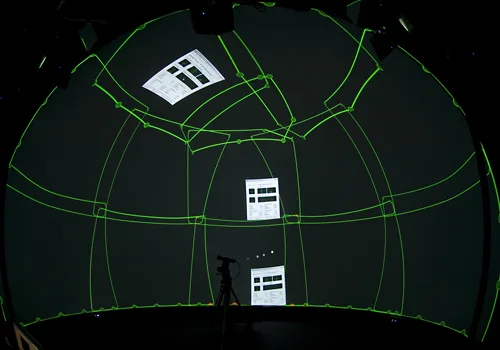
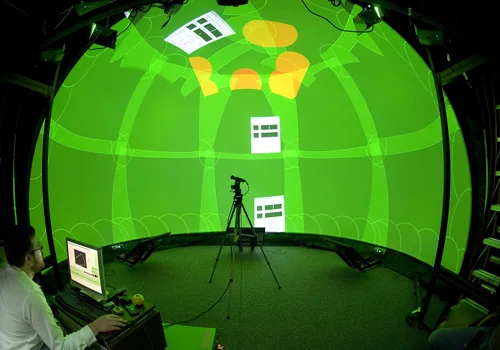
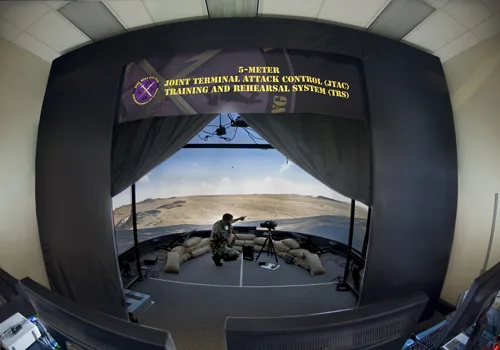
Another fascinating project involved documenting the construction and testing of a five-meter immersive dome used to train Joint Terminal Attack Controllers (JTACs).
This system allowed trainees to experience a fully immersive battlefield simulation environment where they could coordinate air support with pilots during training exercises.
Working alongside a video specialist, we documented the assembly of the system by photographing the installation at timed intervals, creating a time-lapse record of the dome being built from the ground up.
Inside the dome, I photographed the simulation environment using a Nikon camera with a fisheye lens, which allowed the curvature of the projection system and the surrounding simulation environment to be captured in a single frame. The camera was on a tripod against the wall behind a row of computers.
Event Photography
Interservice/Industry Training, Simulation and Education Conference (I/ITSEC)
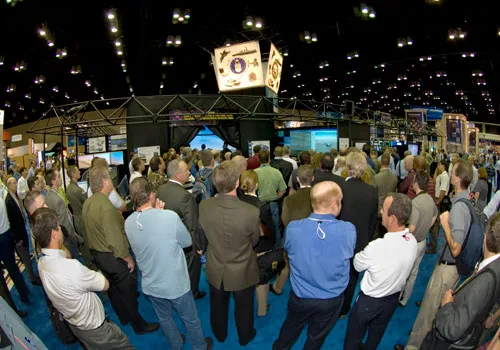
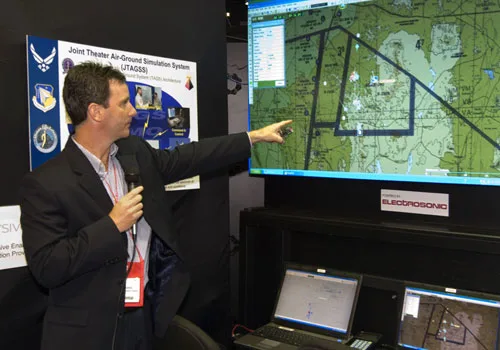
The research our division conducted was later presented at the Interservice/Industry Training, Simulation and Education Conference (I/ITSEC) in Orlando, Florida—the world’s largest modeling and simulation conference.
The presentation demonstrated how JTAC soldiers could communicate with live pilots while interacting with simulated battlefield environments in real time.
The exhibit drew one of the largest crowds among Department of Defense presentations that year.
My photographs documenting the project and presentation were later used in:
-
AFRL newsletters and communications
-
research publications
-
conference materials
-
partner communications
Several partner organizations involved in the project also used the images in their own publications.
Onsite Events
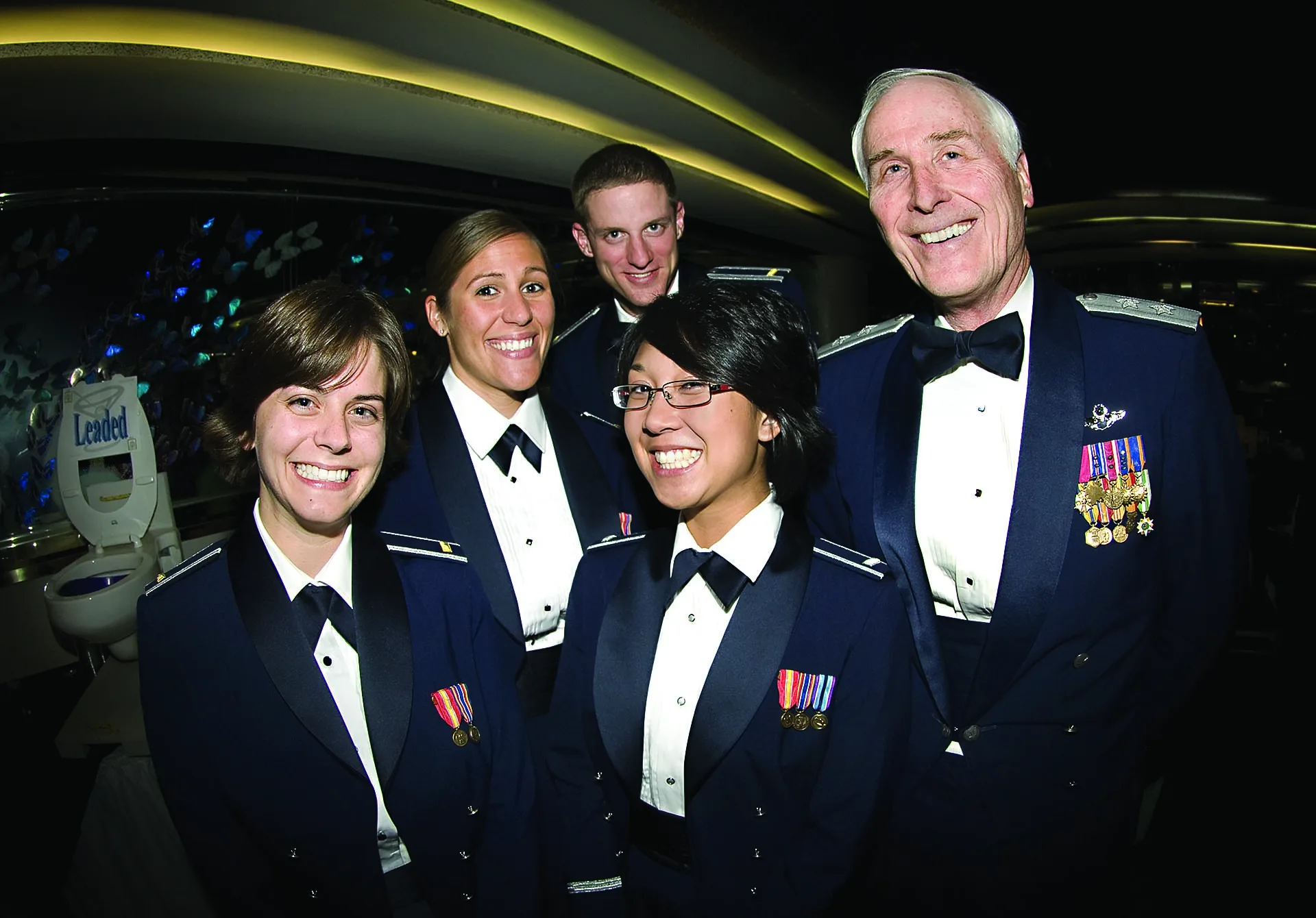
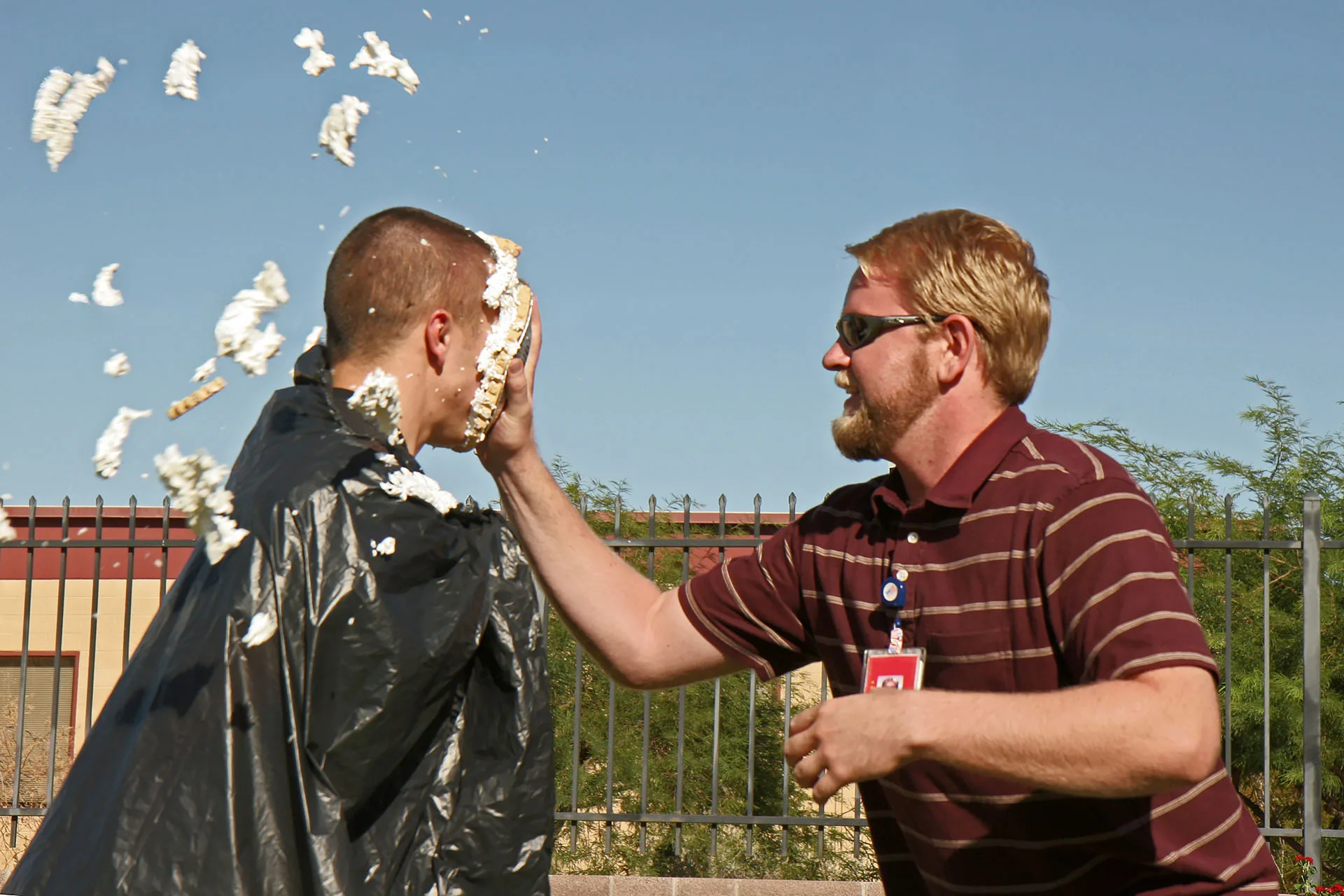
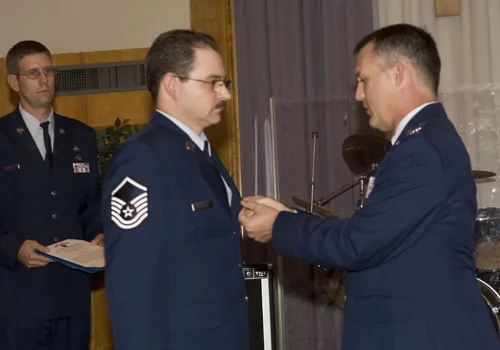
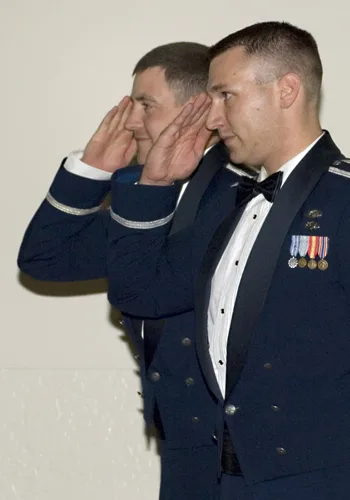
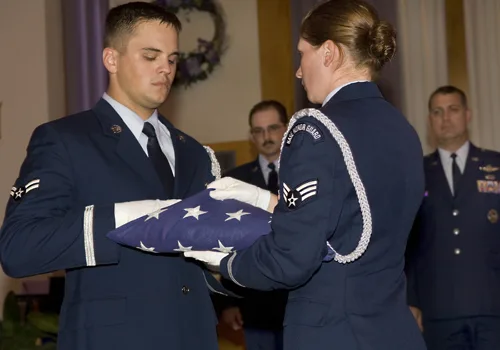
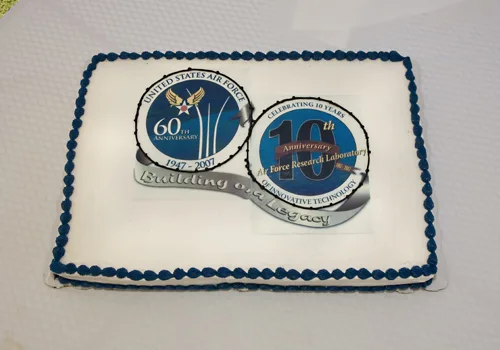
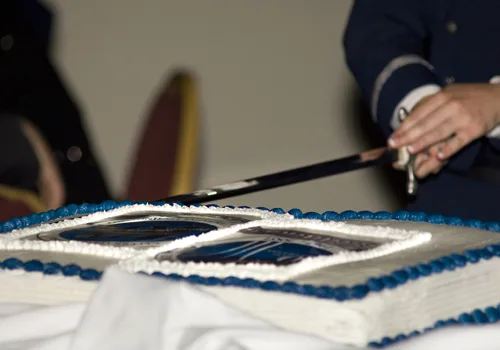
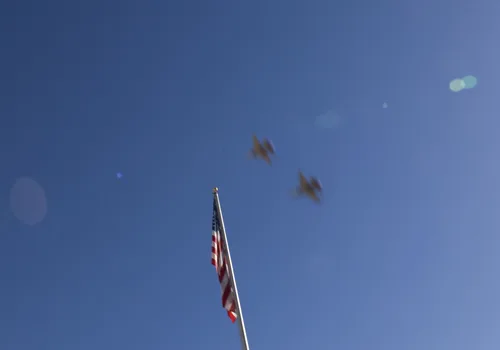
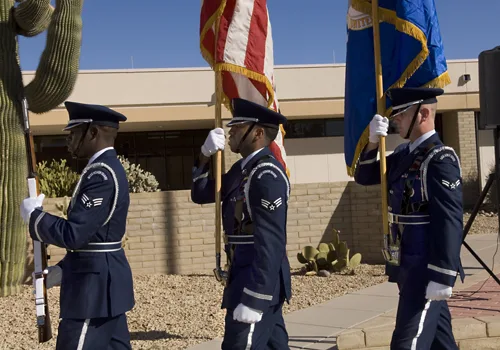
- AFRL 50th Anniversary Open House and Dining Out
- Badge Ceremonies
- Retirement Ceremonies
- Family Days & Barbecues
Graphic Design & Visual Communications
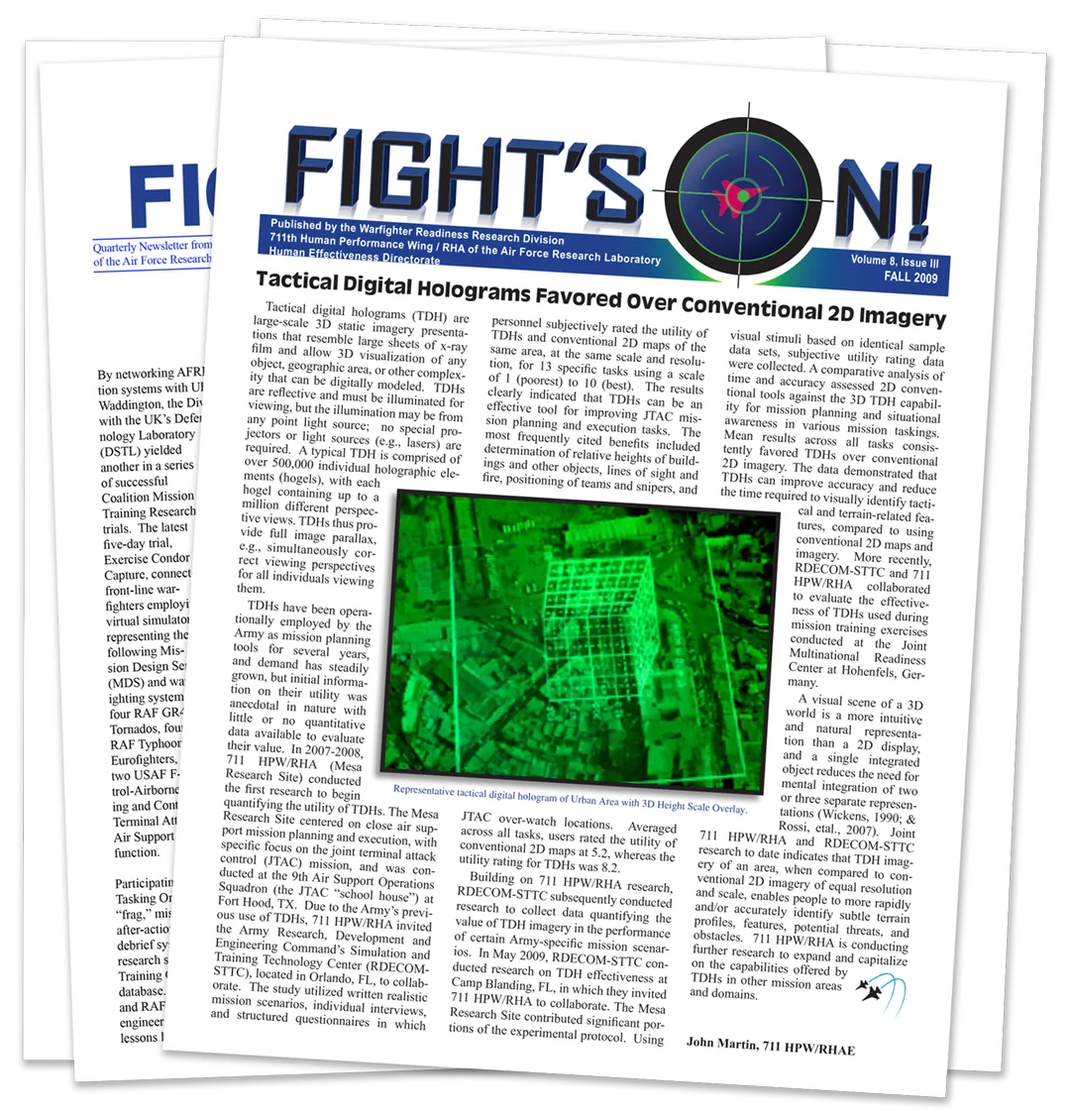
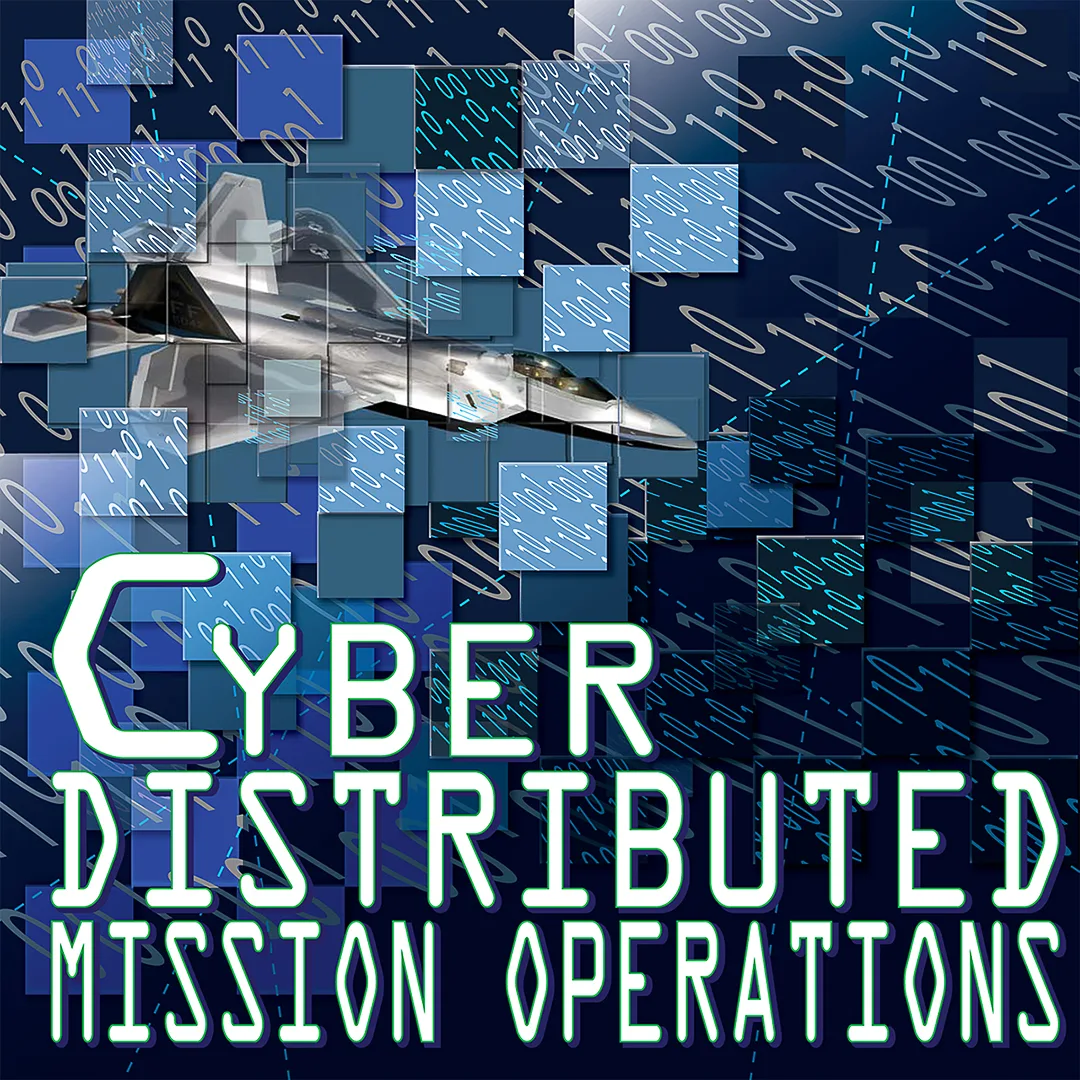
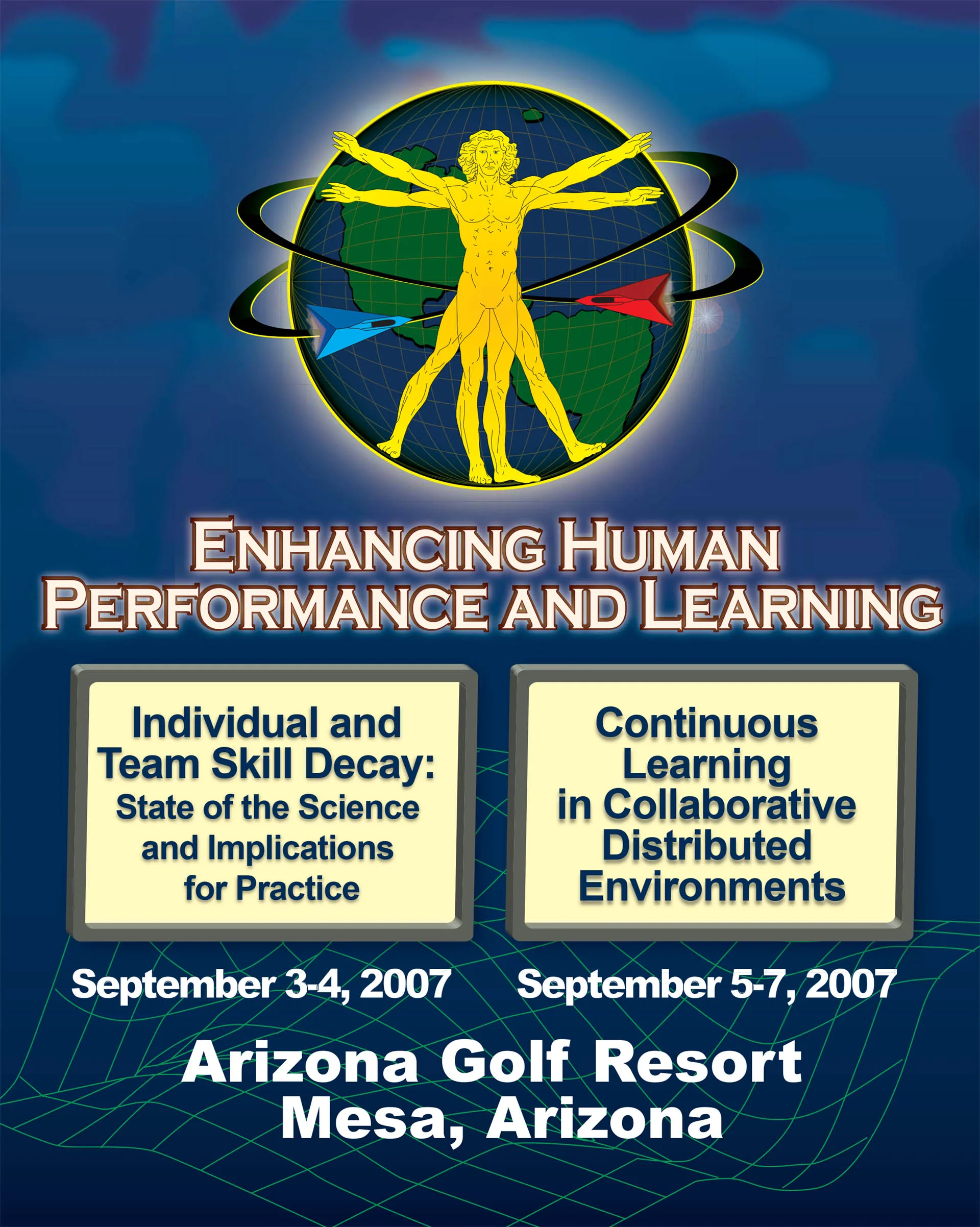
In addition to photography, I supported the division’s outreach and internal communication efforts through graphic design and visual communication projects.
These included:
-
periodicals
-
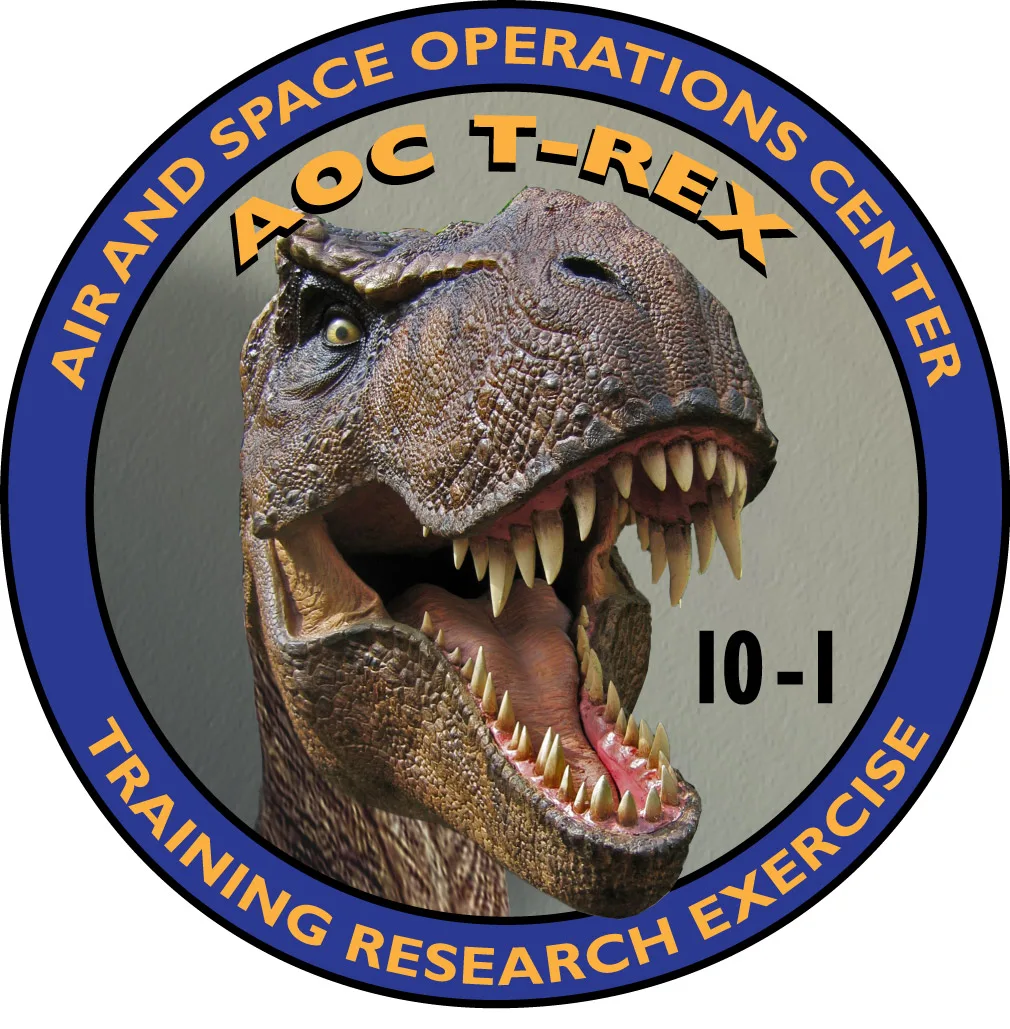
program logos and patches
-
training manuals and instructional materials
-
presentation graphics
-
informational displays
-
conference exhibit materials
These materials helped translate highly technical research initiatives into clear visual information that could be understood by leadership, conference audiences, and industry partners.
Why It Still Matters
Complex organizations do not need a photographer. They need someone who can understand what is actually being communicated, plan for the conditions they will be given rather than the ones they want, and deliver assets a communications team can use everywhere. That is the same work, whether the room is a simulator bay or a boardroom.
If your organization has a story that is difficult to explain, complex to photograph, or spread across more stakeholders and locations than a single shoot can cover, that is the work I do best. Let's talk about scope.
All imagery on this page is UNCLASSIFIED and was cleared for public release.
These photographs and design assets were created by Gina Cinardo during contract work for the Air Force Research Laboratory and are not owned by Ginici Studios.
Copyright is held by the Air Force Research Laboratory, 711th Human Performance Wing. Images are shown here for portfolio reference only and are not available for licensing. Reference to AFRL does not constitute endorsement. The site-wide copyright notice below does not apply to the imagery on this page.
